Friday, February 18, 2011

Who To Watch After Mubarak

What is going to happen in Egypt now that Mubarak is out of power? That is a question on everyone’s lips. The simple fact is that most people in the intelligence business around the world were caught as surprised by the protests, and their peaceful and fast results, as all of the rest of us and the idea of who or what will follow the current regime has not yet been considered in detail. Fortunately there are a few experts who did see this coming and who have some ideas about the answers to these questions.

Even though the senior military is now at the top of the power structure following Mubarak it is apparent that they almost certainly have no clear idea of what happens next. It will be days or weeks before anyone knows how well the transition will function, who goes and who stays, and how stable the result really is.

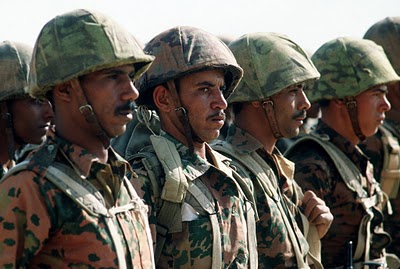
That said, there are some broad things than can be said about the Egyptian military. First, there is no one military, and a careful distinction needs to be made between the actual military with around 470,000 personnel under the Ministry of Defense and the “others”. Others in uniform include the 325,000 personnel in the Central Security Services and 60,000 in National Guard (under the Ministry of the Interior). These latter forces are the primary source of the oppression and of the growing authoritarianism and abuses that Egyptians are now protesting.
While the Egyptian military may well be the ultimate power brokers in a time of major political upheaval, they also are a military force and not the de facto government. They do not dominate the economy or civil government, and most have been subject to surveillance by Egypt’s oppressive intelligence services. These services themselves present real question about Egypt’s future power structure.

The Egyptian military is not an isolated elite. They are a citizen army. Most actual soldiers are conscript and many junior officers are graduates who serve short tours or who join the military because it is the only job available. Mid level officers are usually career professional that are not part of the political side of the military. They have won considerable public respect and support over the years, but they also have lost status as a new class of businessmen and profiteers has acquired great wealth and the disparities in income have grown. Most can now buy less by way of housing, education for the children, and the key elements of middle class living than in the past.

Some do have every reason to be loyal to the status quo. There are significant numbers of retired senor military officers in Mubarak’s inner circle who have been given sinecures and senior posts in the civil government and state industries, and who will want to continue to benefit from the regime. But the bulk of even senior the officers who leave don’t enjoy these privileges. Most senior officers are in career paths that do not give them special access to those who were in Mubarak’s close circle. Those who do become part of Mubarak “loyalists” have acquired money and status, but the further even senior officers are outside the circle, the more they rely on their military pay. and the more reason they have to be loyal to the nation and not the leader.
These distinctions also help explain why most of military retain so much popular respect. It is also important to understand that democracy is less important to most Egyptians than material benefits, jobs, decent education, effective government services, ending corruption and favoritism, and emphasizing the concept of justice in ways that provide security and honest police and courts. People aren’t looking for a vote as much as they want to stop the economic, political and social injustice — a search compounded by the fact Islam place so much emphasis on justice in every aspect of life and governance. The loudest and most Western voices in the square do not always speak for the Egyptian people, and practical compromise with around programs that provide justice and benefits may be easier for both the military and the people than some realize.

At the same time, the military’s top priority is to preserve the nation and maintain order and limit chaos or upheaval. They are far less likely to use torture or violence than the forces under Ministry of Interior as the entire command ethic of the professional military is the nation, not the leader, and military discipline puts real restraints on their actions. However, there also are real limits to their tolerance. They will not accept a breakdown of the government or economy. They will not accept paralysis or demonstrations that become violent, although they will not support a new wave of repression. Whomever is perceived as the most radically violent will tend to lose.
The good news is that Egyptians as a whole tend to be pragmatic and not violent. (And they have the best political jokes around.) There are, however, serious legal barriers that need to be addressed, that will make life difficult for both the military and the people unless pragmatism takes priority over formal legal constraints. 

There also are senior military and ex-military in government and around Mubarak that occupy key posts and have a vested interest in blocking reform. These include top military and ex-military: Lieutenant-General Omar Suleiman, the former head of the military intelligence service and now Vice-President; Ahmed Shafik, a former air force commander and now Prime Minister , and Field Marshal Mohammed Hussein Tantawi, the Defense Minister, the new deputy premier. They were all part of the Mubarak cadre. None are symbols of progress and change and all also have little real political experience, no knowledge of reform, and little experience in the kind of effective civil governance and economic reform Egypt will now need.
Moreover, both the military and all of Egypt’s civil leaders will suffer from the legacy of a political system where any opposition has been suppressed and sidelined for some 30 years. No political parties have the level of experience in cooperation and governance to rapidly participate in an election or show they can govern. The largest opposition party, the Muslim Brotherhood, is led a by a gerontocracy and deeply divided between traditionalist and reformers, with extremists at the margins. The other parties are untried, although they have some bright intellectuals, and proven businessmen.

This is why Obama administration is right in trying to find a transition that will provide the time needed to make the changes that will allow an effective political process to emerge, suspend the emergency law and create a structure where people can run and campaign. It is seeking to persuade the regime to accept a meaningful reform plan, in part because there is no way the regime can go back to the old system and a rigged September election could create a far worse crisis and a far higher prospect of lasting instability.

Moreover, regime change is only part of the story — for the military and the Egyptian people: No matter who emerges as the post-Mubarak leader, the economic and demographic pressures that have driven this uprising are going to remain for at least several years. This uprising takes place in the cauldron or world economic collapse. As in a disturbingly growing number of places throughout the world, in Egypt there are food spikes, fuel spikes, recession, a huge young population, weak job market, growing disparity of income. The UN has declared major food shortages throughout the world, and the future is uncertain — particularly given the drought in China. In Egypt, many live pretty much on subsistence. If it were not for food aid and subsidies they wouldn’t survive at all. For the rest, there are few new jobs here that offer the growing jobless population any employment, much less jobs with status.

This may well mean that whatever new government comes to power has less than a 50 percent chance of surviving for two years. Patience is an Egyptian virtue, but the Egyptian people (and the military) are unlikely to tolerate failed politics, failed governance, and token progress. This, in turn, poses a long-term challenge for the US that goes far beyond who in the military has power in the first phase of change following Mubarak’s departure. Egypt controls a critical global trade route in the Suez Canal. The security of the Canal and its pipeline have a major impact on energy prices and the world economy. Egypt is key to the Arab-Israeli peace and stability in the region, US military overflights and staging, and the struggle against extremism. In short, Egypt is a vital US national security interest — in fact, a far more vital interest than Afghanistan or Pakistan.


Live Long and Prosper....

Thursday, February 17, 2011

The Civil War – Union Activities in February 1861

President Buchanan Stands on the Defensive

On February 5th, the sloop of war, U.S.S. Brooklyn, arrived at Pensacola, Florida, with troops, munitions, and provisions on board. Waiting for her were U.S. Navy warships—Sabine, Macedonian, Wyandotte, and St. Louis—called to the Gulf of Mexico from distant stations. Between the time the Brooklyn went to sea and its arrival at Pensacola, President Buchanan had rejected South Carolina Attorney General Hayne’s effort to negotiate the purchase of Fort Sumter from the government, and he had received ex-President John Tyler of Virginia, who arrived in late January with a request from the State of Virginia that Buchanan maintain the status quo, pending Virginia’s effort to convene a “Peace Convention” in Washington, to be attended by delegates from all the States; a last ditch effort to achieve a political resolution of the crisis caused by secession.

In consequence of his communications with Tyler, President Buchanan agreed to a truce at Pensacola which his secretaries of war and navy jointed communicated to Captain Vodges, commander of the troops on board the Brooklyn.

Sir: In consequence of assurances received, that Fort Pickens will not be attacked, you are instructed not to land the company on board the Brooklyn, unless you see preparations being made for an attack. The provisions necessary for the supply of the fort you will land.

J. Holt, Secretary of War
Isaac Toucey, Secretary of the Navy

About the same time as this, South Carolina Attorney General Hayne left Washington, his effort to negotiate the purchase of Fort Sumter having been rejected by Buchanan. During Hayne’s stay in Washington, a truce existed at Fort Sumter, through an agreement made between Major Anderson and Governor Pickens that the State would allow provisions to be delivered to the fort from Charleston, and in exchange Anderson would not act offensively, pending the result of Haynes’s effort at Washington.

At this point, President Buchanan held several conferences with General Scott, other officers, and a civilian named G.V. Fox, who offered a plan of entering Charleston Harbor during the night with troops in small boats. Buchanan determined to prepare an expedition, under the command of a naval officer, composed of “a few small steamers” which “might enter the harbor at night and anchor, if possible, under the guns of Fort Sumter.”

While these conferences were being held, the engineering officer at Fort Sumter, Lt. J.G. Foster, sent almost daily reports to the War Department describing the frenetic activity the Confederates were engaged in, building artillery batteries. 

The expedition did not sail. General Scott had made it clear to Buchanan that it was impossible to expect success in reinforcing Sumter, using such a small and defenseless force as Fox had suggested. In his opinion, nothing less than a full fleet of gun ships, capable of suppressing artillery fire from the Confederate batteries encircling the fort, along with a body of troops numbering 20,000, to land on the beaches, was required. This force Buchanan plainly did not have. Influencing Buchanan’s decision, too, was the fact that the State of Virginia had sent an emissary to Governor Pickens, who reported that South Carolina would respect Virginia’s plea that no hostile act be done at Charleston while the Peace Convention was underway at Washington. President Buchanan’s decision was conveyed to Major Anderson by Secretary of War Holt.

WAR DEPARTMENT, February 23, 1861

Major Anderson:

I state distinctly that you hold Fort Sumter as you held Fort Moultrie, under the verbal instructions communicated by Major Buell, subsequently modified by instructions dated the 21st of December.

In my letter to you of January 10th, I said: `You will continue to act strictly on the defensive and to avoid a collision with the hostile forces by which you are surrounded.’
The policy thus indicated must still govern your conduct. The President is not disposed at the present moment to change the instructions. . . This will be but a redemption of the implied pledge contained in my letter on behalf of the President to Attorney General Hayne, in which, speaking of Sumter, it is said: `The people of South Carolina have nothing to fear from Sumter’s guns, unless, in the absence of all provocation, they should assault it and seek its destruction.’

The labors of the Peace Convention have not yet been closed, and the presence of that body here adds another to the powerful motives already existing for the adoption of every measure for avoiding a collision.”

J. Holt, Secretary of War

And again, on February 28, 1861:
Major Anderson:
The Secretary of War directs me to say that the Peace Convention today agreed upon a basis of a settlement of our political difficulties, which was reported to Congress. The Secretary entertains the hope that nothing will occur now of a hostile character.

S. Cooper, Adjutant General

Lincoln Travels by Train Roundabout to Washington

During the first three weeks of February, President-elect Abraham Lincoln made his journey from Springfield to Washington. He took his time coming; stopping at Indianapolis, Cincinnati and Columbus, Pittsburg, New York, and Philadelphia. In the course of his zigzag trip he met in private conference with the Republican governors at the helm of the State governments in Illinois, Indiana, Ohio, Connecticut, New York, Rhode Island, Massachusetts, and Pennsylvania, gathering their support for what he told them would be coming next. In his public speeches, he made conflicting statements: though he intended to hold the forts of the Union he saw no need for war; indeed, he said, “there is no occasion for alarm as nobody’s been hurt.” From these utterances, the newspapers reported that Lincoln considered the country to be in no danger, that there would be no occasion to use force.

Reaching Philadelphia, he told the audience surrounding him at Independence Hall that he could see no need for war unless. . . “I may say in advance that there will be no bloodshed unless it is forced upon the government.” How “forced?” “The government will not use force, unless force is used against it?” Moving then to Harrisburg, Lincoln met with Governor Curtin, and to the public said a few words: “With my consent, or without my great displeasure, this country shall never witness the shedding of one drop of blood by fraternal strife.” Then back to Philadelphia he went and in the night changed trains and reached Washington at dawn.

When he arrived in Washington, on February 23rd, he took rooms at the Willard Hotel—the same location where the Peace Convention was being held—and entertained the crowds of people who came to see him, touch him, and get a job from him. He was sized up by all concerned as easygoing, convivial and a bit droll.

But when he encountered one of the New York money kings in the halls of the Willard, he projected a different impression to the public altogether. Dodge, the capitalist, came to Washington with an entourage of bankers and wall streeters.

“Now,” said Dodge, “it is for you, sir, to say whether the whole nation will be plunged into bankruptcy, whether the grass shall grow in Wall Street.”

“Then, I say it shall not,” Lincoln is reported to have retorted. “If it depends upon me, the grass will grow only in the fields and meadows.”

“Then you will not go to war with the South on account of slavery?”

All merriment gone suddenly from his face, Lincoln locked eyes with Dodge and said: “I do not understand your meaning, Mr. Dodge. I will preserve, protect, and defend the Constitution until it is enforced and obeyed in every one of the United States, let the grass grow where it may.”

For a week, waiting for Inauguration Day, Lincoln went about the business of politicking; he called upon President Buchanan at the White House, shook hands with the members of Buchanan’s Cabinet, visited with Stephen Douglas, interviewed General Scott, and met with the Republicans in the Senate and House.


Live Long and Prosper....